Dashboard for tracking poker games
TIMELINEMarch 2025
SKILLSVibe Coding, Product Design
OVERVIEW
Tracking poker nights with friends
Built a simple web app to track weekend poker games with friends—logging sessions, tracking who wins and loses, and maintaining a running leaderboard. Made with Lovable as an experiment in vibe coding.
THE PROBLEM
No record of who was actually winning
A group of us play poker on weekends with small bets, just for fun. After a few sessions, I realized we had no idea what the net results were over time. I wanted to see who was actually ahead and who was losing the most. We weren't tracking anything, so the results of each game just disappeared into the group chat.
THE SOLUTION
A simple dashboard for sessions and stats
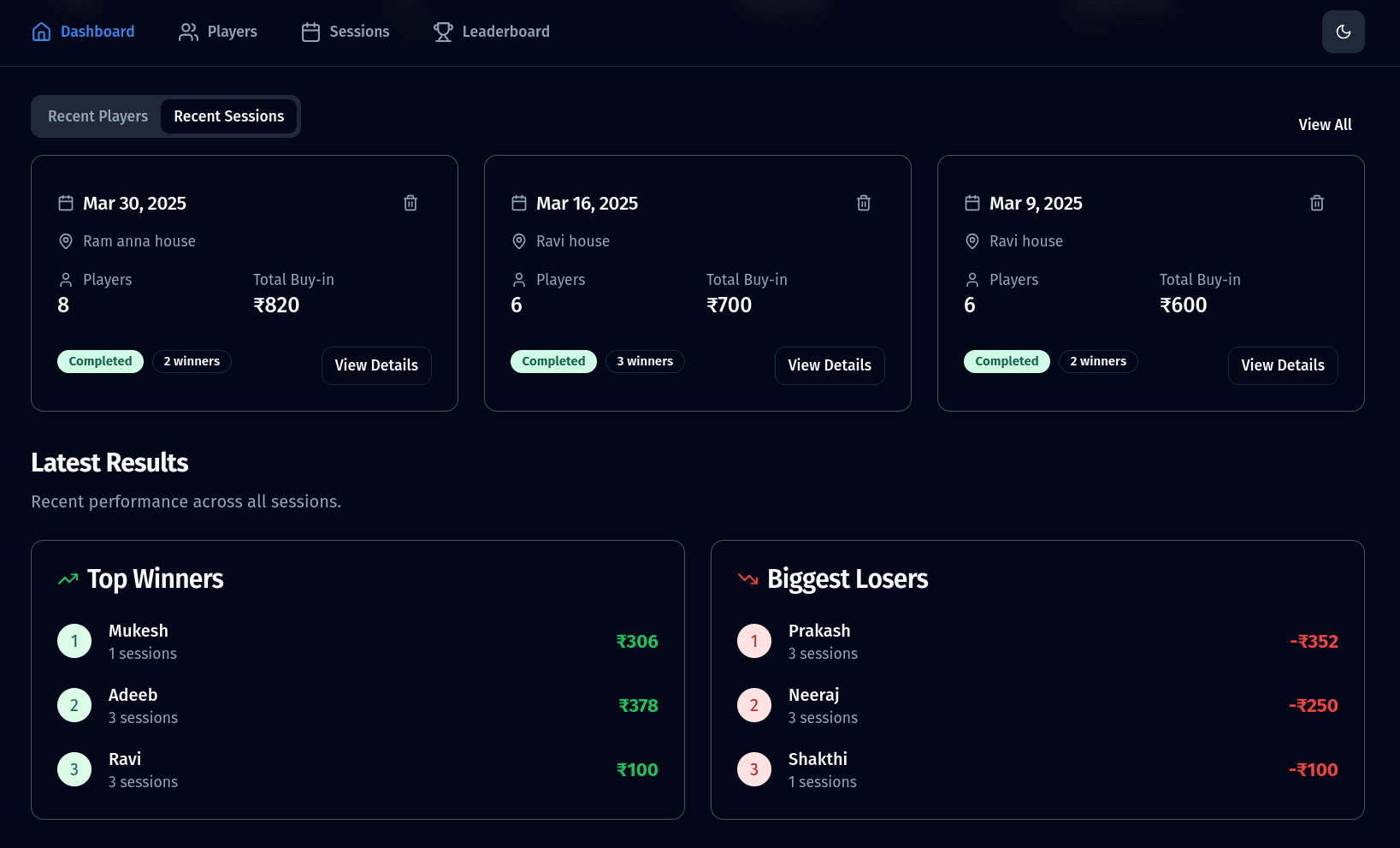
A web app with four main sections: a dashboard overview showing total money played and top winners, a sessions page to log each game with location and results, a players page tracking individual buy-ins and cash-outs, and a leaderboard showing who's up and who's down.
HOW I BUILT IT
Learning to vibe code
This was my first time using Lovable, and it was during the very early days of AI coding tools where you could prompt and see a working app in minutes. I tried a generic prompt first but it didn't give me all the features I needed, so I switched to a more structured approach.
I designed the database schema for players, locations, and sessions, outlined the specific pages I wanted, and connected it to Supabase for storage. After a few iterations, it worked as expected—session tracking and leaderboard updates all functioning. I didn't write a single line of code myself; the AI generated everything.
THE RESULT
The leaderboard became part of the game
The dashboard became a regular part of our weekend games. Everyone checks the leaderboard, and there's the usual teasing about who's losing the most. It's satisfying to have a record of our games instead of forgetting the results each week.
REFLECTION
Building for yourself is fun
This was the first time I built something specifically to improve a small part of my life. It was also my introduction to vibe coding—seeing multiple files generated at once and having a working app in a couple of minutes felt pretty wild. The tool made it possible to go from idea to working product without writing code, which felt like a peek into how personal software might get built in the future.